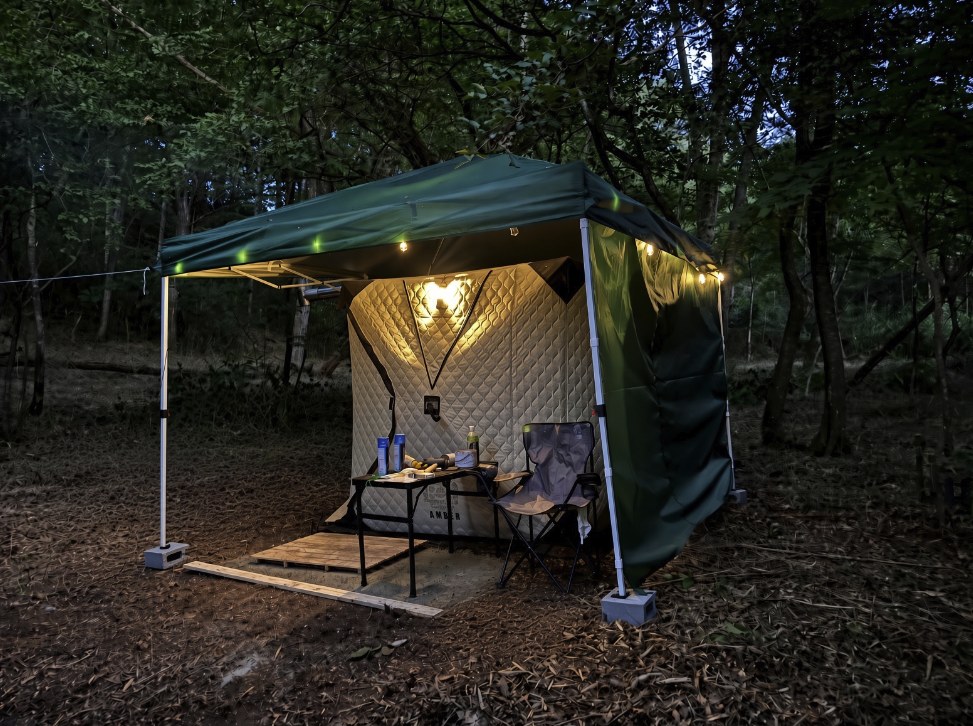
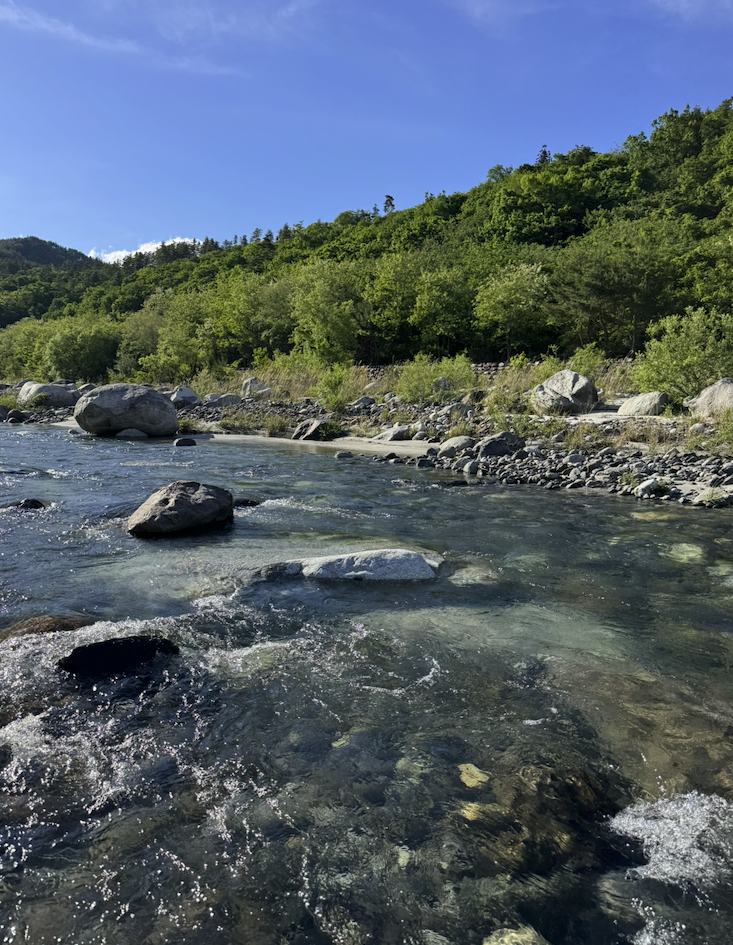
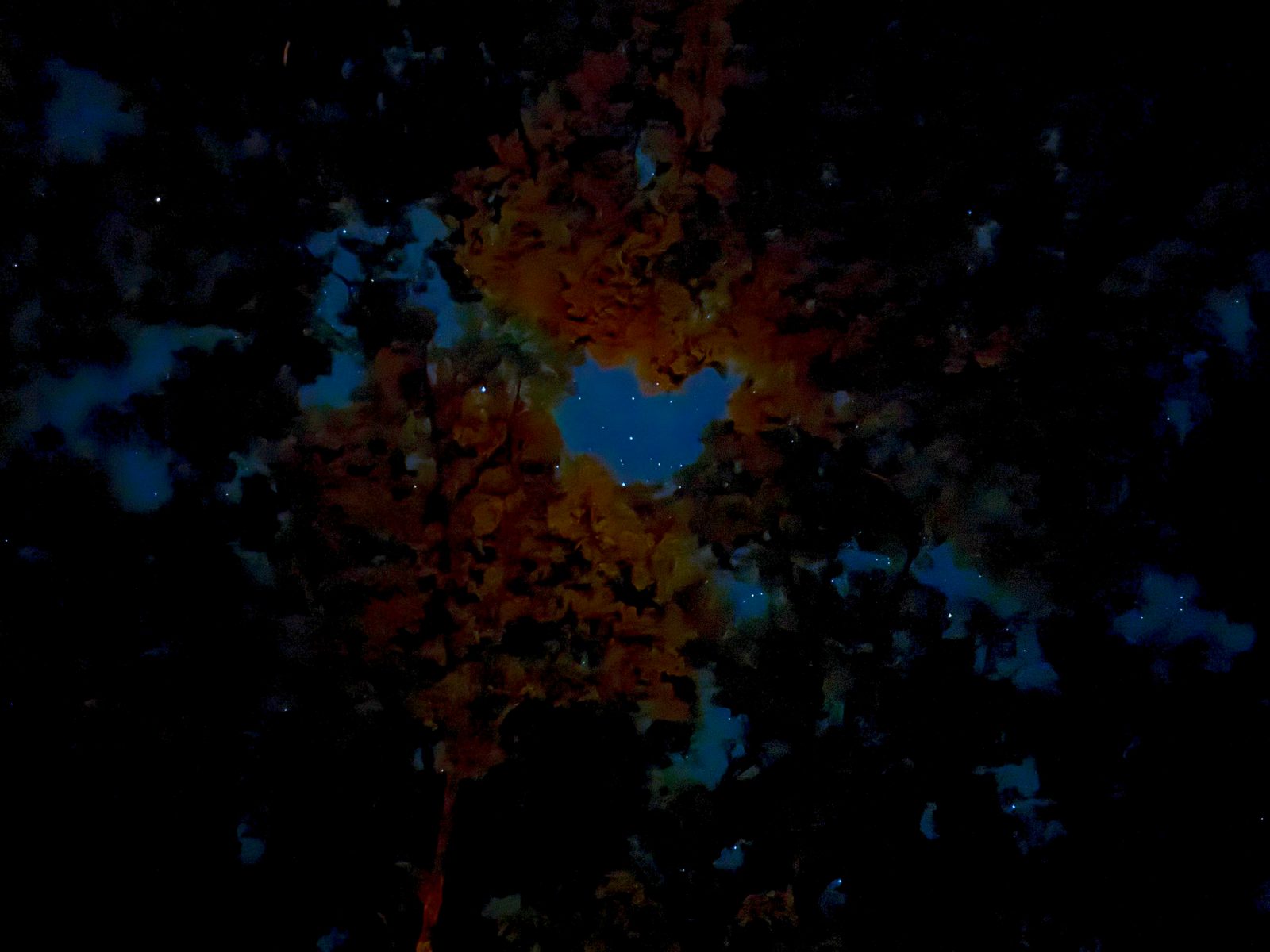
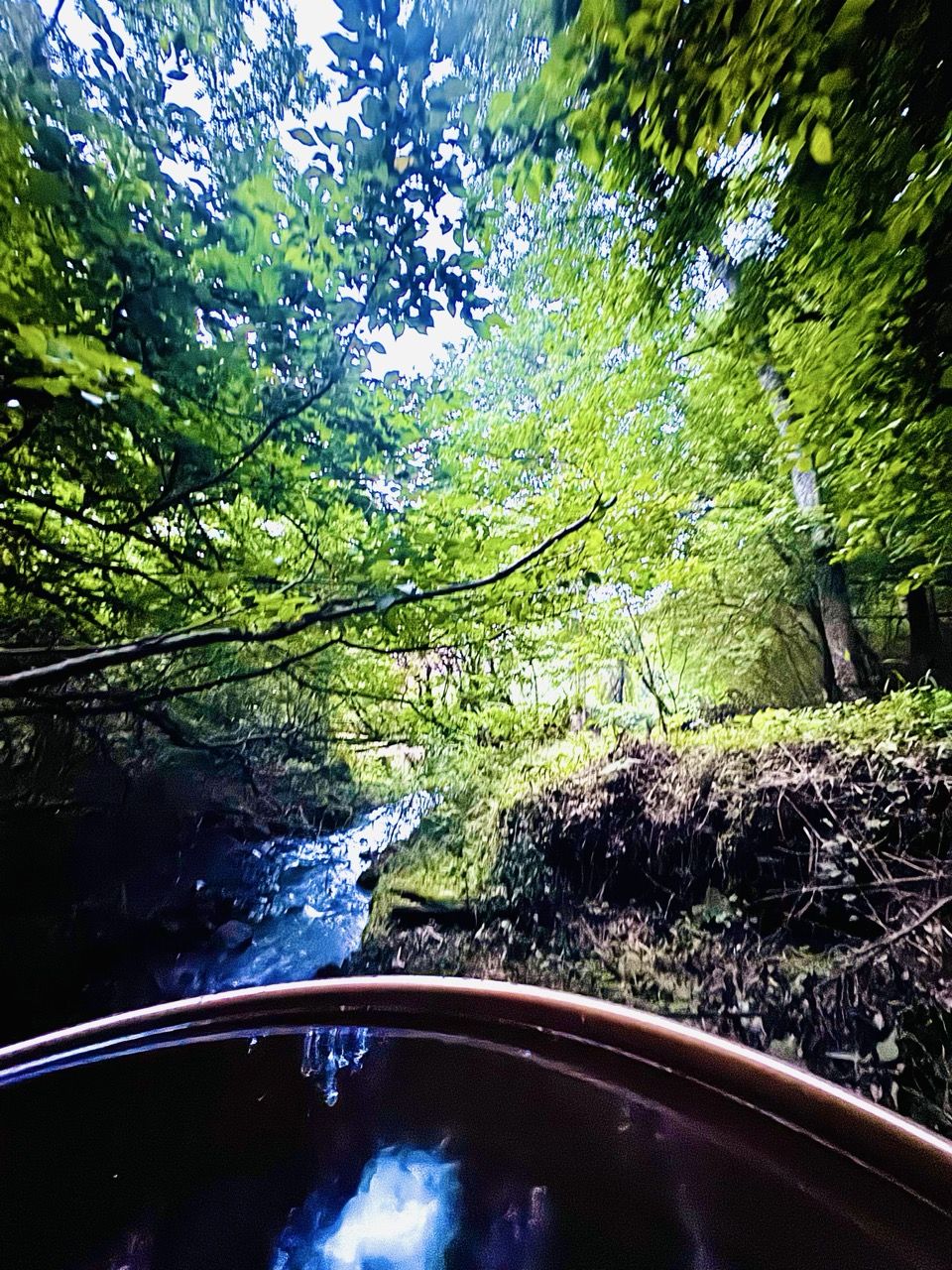
In Hokuto, Yamanashi, on a stretch of wild land, there is a single sauna. Within a 500-metre radius, no one. The cold bath is the stream that runs just beside it — around fourteen degrees in spring, eighteen in summer, eight in winter, clear to the very bottom. The fire passes a hundred degrees. The place is never disclosed. It is not on any map. The only way to know it is to be invited.
It does not appear in search.
It is not on the map.
No notifications sound; nothing is recommended.
There is only fire, hot water, and the sound of the stream.
Here, nothing is optimised.
Here, there are no notifications.
The information you carry in, you leave behind.
Brush the earth from your feet.
Move a stone in the stream; dam the flow, a little.
Shallow today. Cold today.
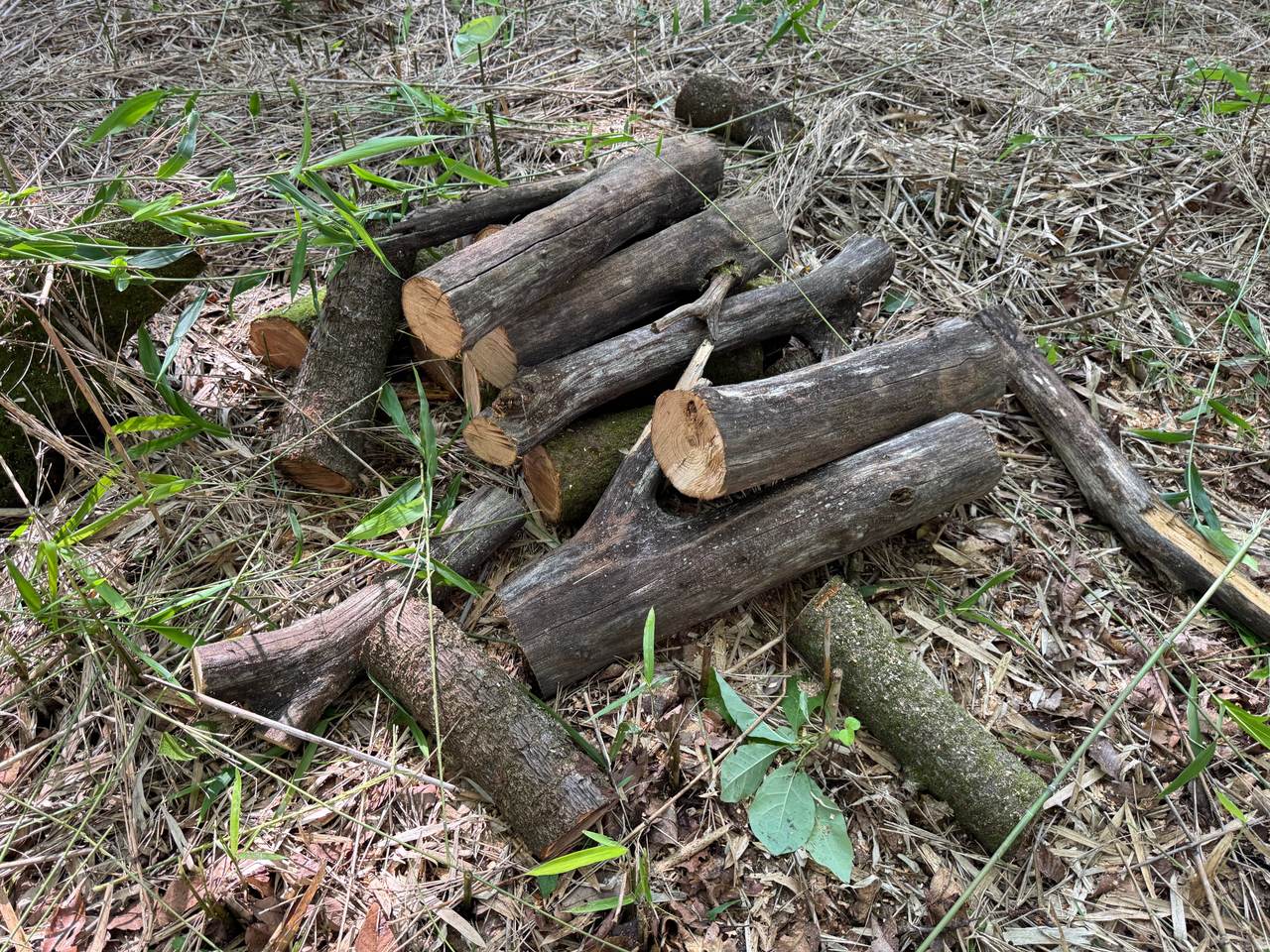
Light the fire. The scent of smoke settles in.
In the forest, find a place to set a chair.
That alone is enough.
A clear stream, always running.
▶ Tap to play — with sound
Besides fire and water, nothing has been prepared.
The rest is how you spend this land — that is all.
Play in the stream. Fish. Build a fire and grill over charcoal.
Carve wood, touch the earth. The stream will chill your drinks. Sometimes, do nothing.
Within 500 metres, no one. So you can play any music, at any volume. No one is troubled; no one is watching. Bring your pet, too. A dog can run off the leash. Being a real stream, there are river crabs to play with. None of this is possible where there are people, or with manufactured water.
It is self-service, so there are no set hours.
Light the fire at noon, or stay through the night. Come when you like, stay as long as you like.
There is no prescribed way to spend it. No limit to how you use it.
In nature, the stress hormone falls. The body tilts from tension toward rest. Studies of forest environments have confirmed it, again and again.
Stay for an hour or so, and worn attention begins to recover. On warm days and cold days alike, the effect is said to hold.
Research on solitude is clear: when a person feels safe, being alone restores more deeply than being in company.
The key is safety. So YUUKA does not leave solitude to chance. On a foundation of screening, reservation, and a line always open, we set a stillness with no one within 500 meters.
There is only one building. The time you book is never shared with another group.
The crackle of fire. The murmur of the stream. Natural sound stirs the nerves that govern rest. Here, that is all there is.
We promise no grand benefits. Only this: time that asks nothing of you, and solitude that is kept safe, are among the hardest things to find today.
Sources: Park et al. 2010, Berman et al. 2008, Staats & Hartig 2004, and others.
YUUKA is not a finished facility.
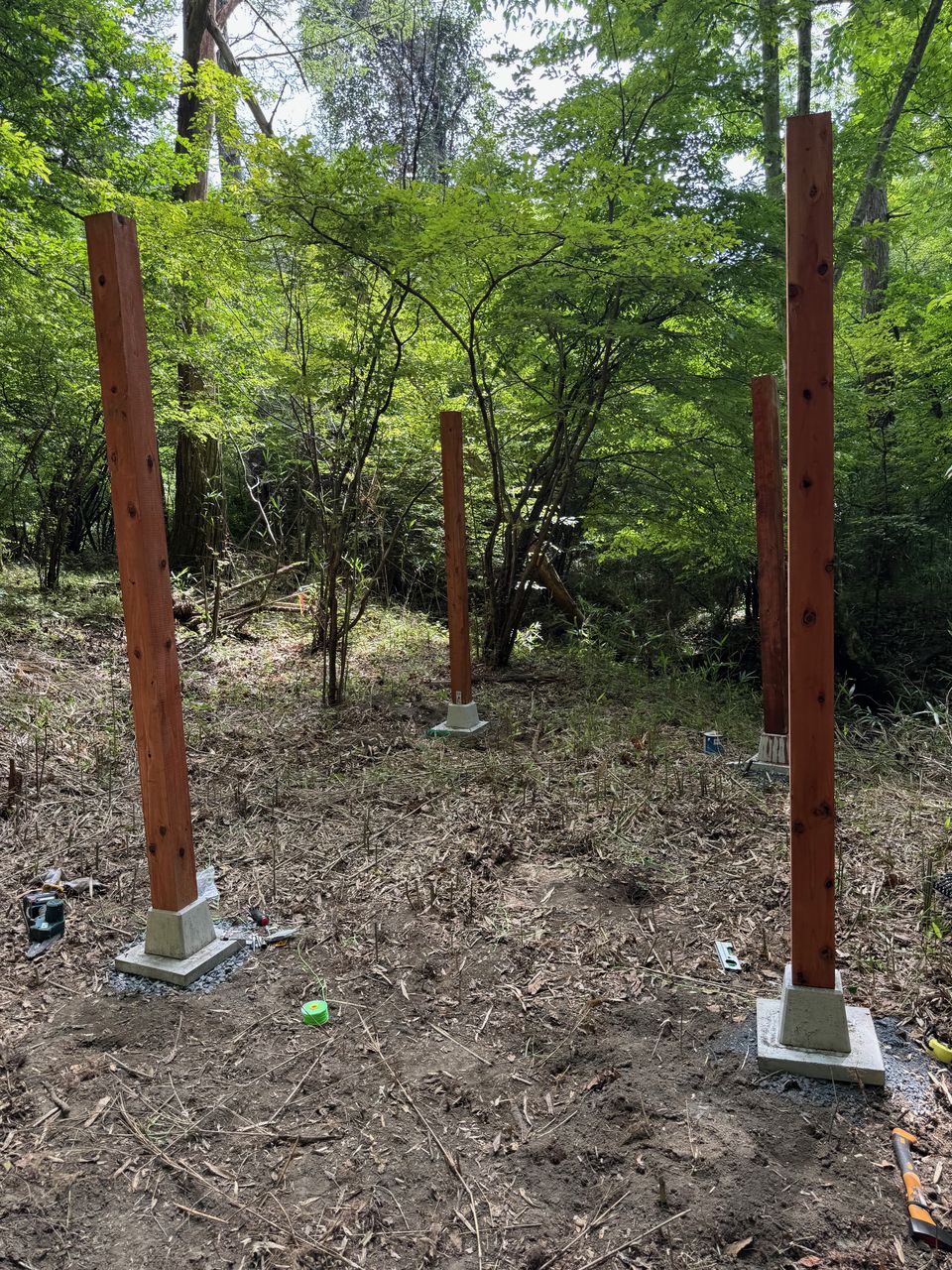
It is a place we are raising slowly — lighting fire on wild land, stepping into the water.
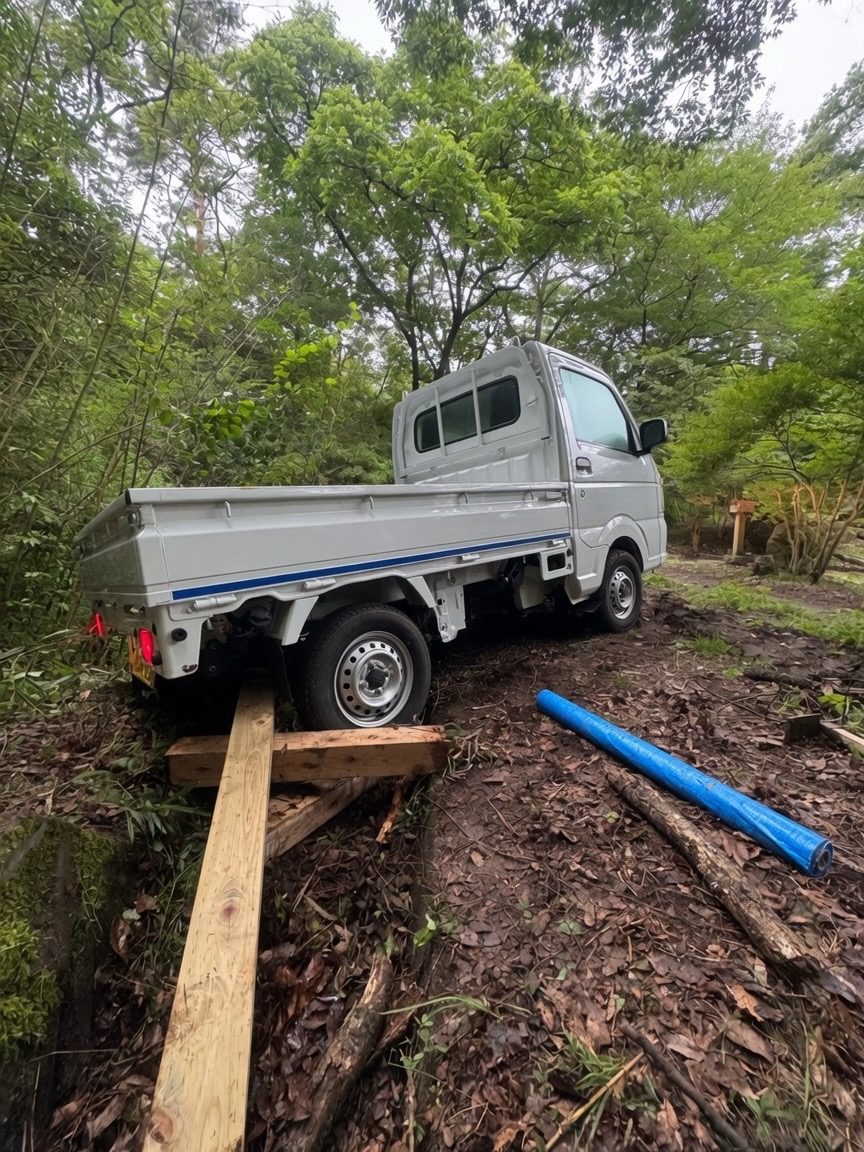
A small truck crosses a plank into the wild land.
Clearing stones, cutting grass — the place for fire is being made by hand.
We are looking for people to join this clearing.
At the end of a day of sweat: the wood fire, and the stream.
Send an email with the single word “Pioneer”.
Dates and details will follow by reply.
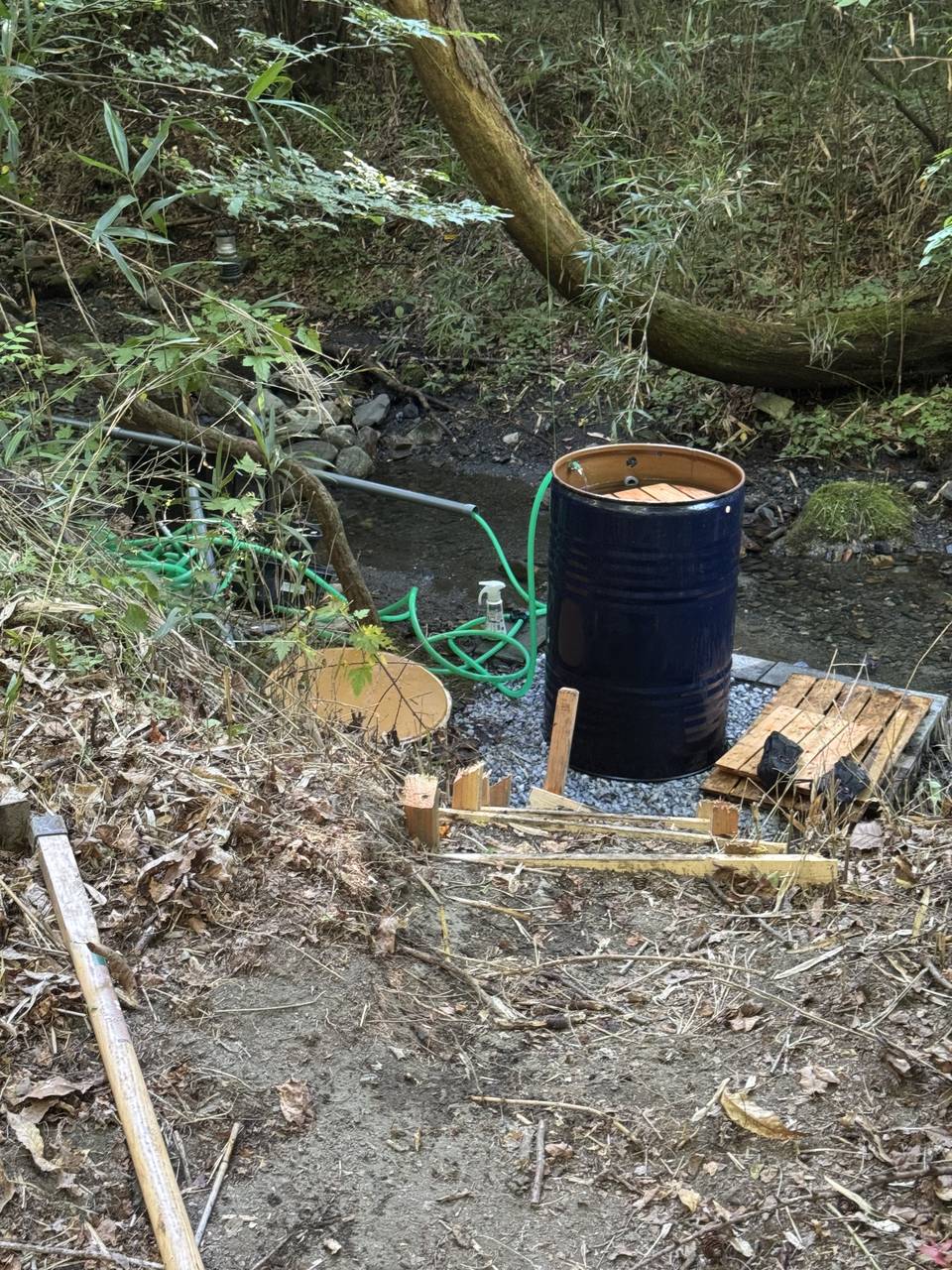
Most of what is here, we made by hand.
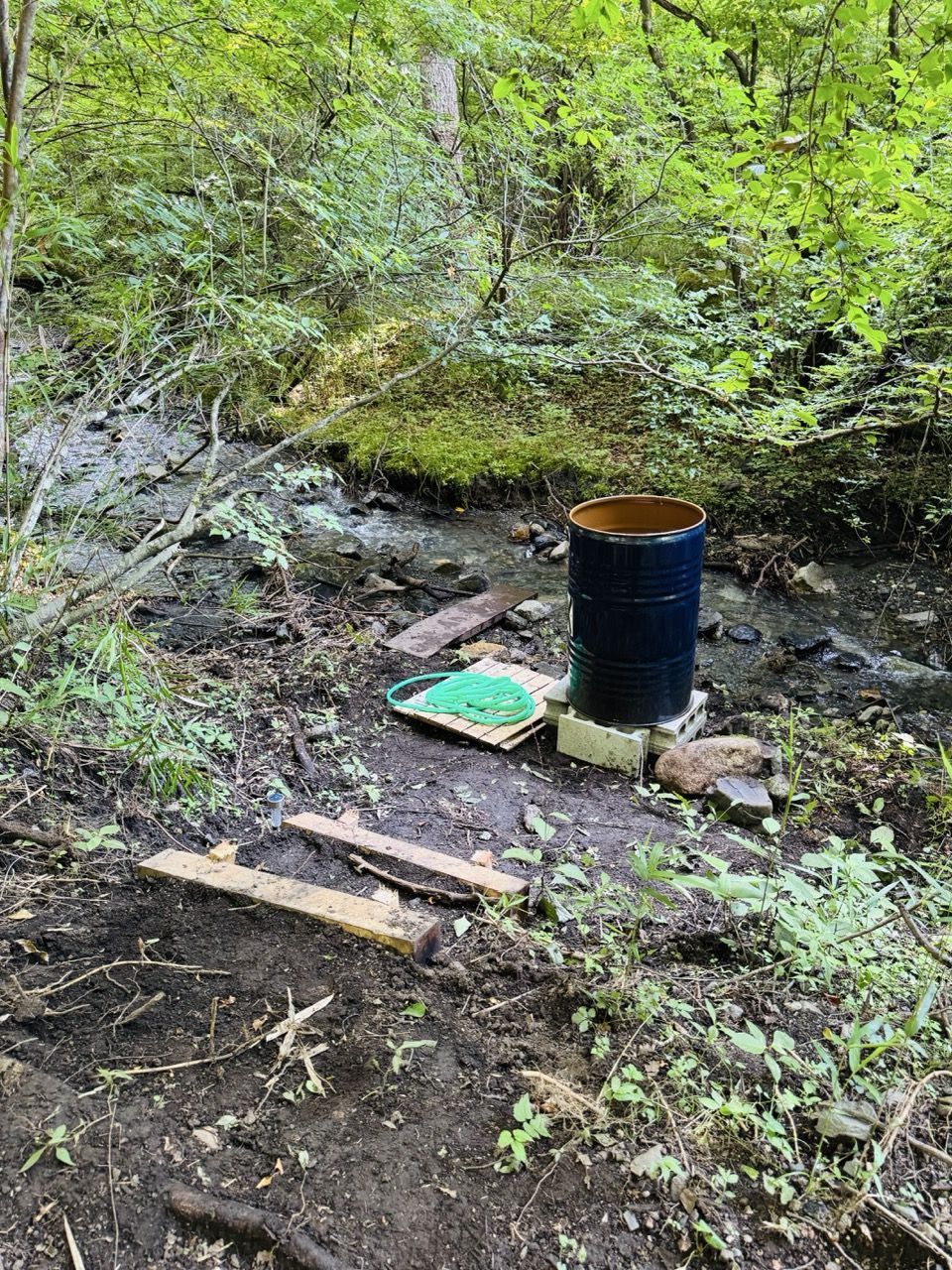
The woodshed, the sink, this bath.
Set a steel drum, draw water from the stream, stack the blocks, lay the boards.
Buying is faster. We build it anyway.
You sink into the bath you built, with the sound of the stream.
That time, at least, is not for sale anywhere.
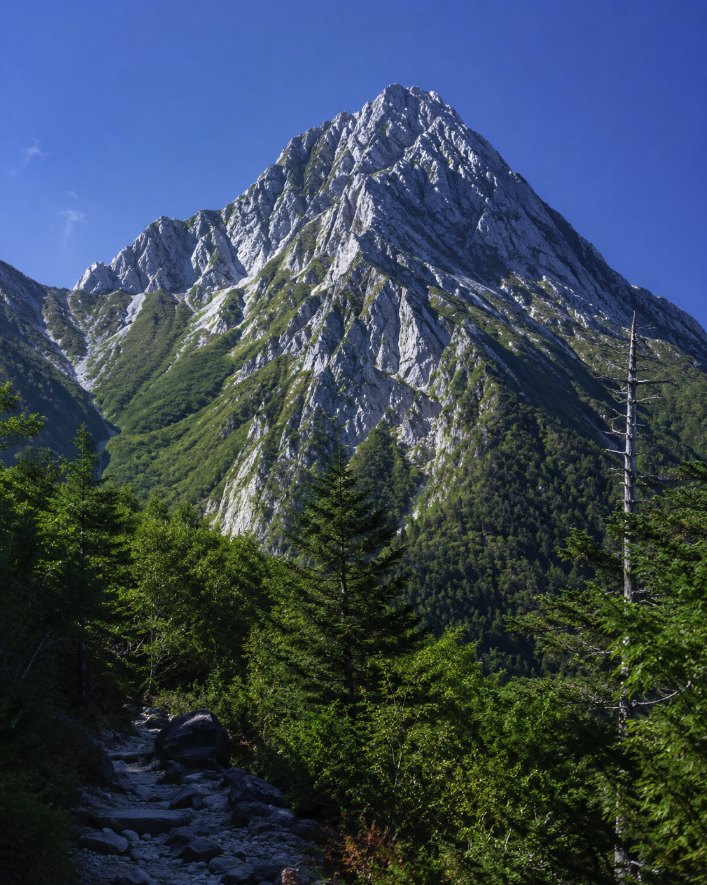
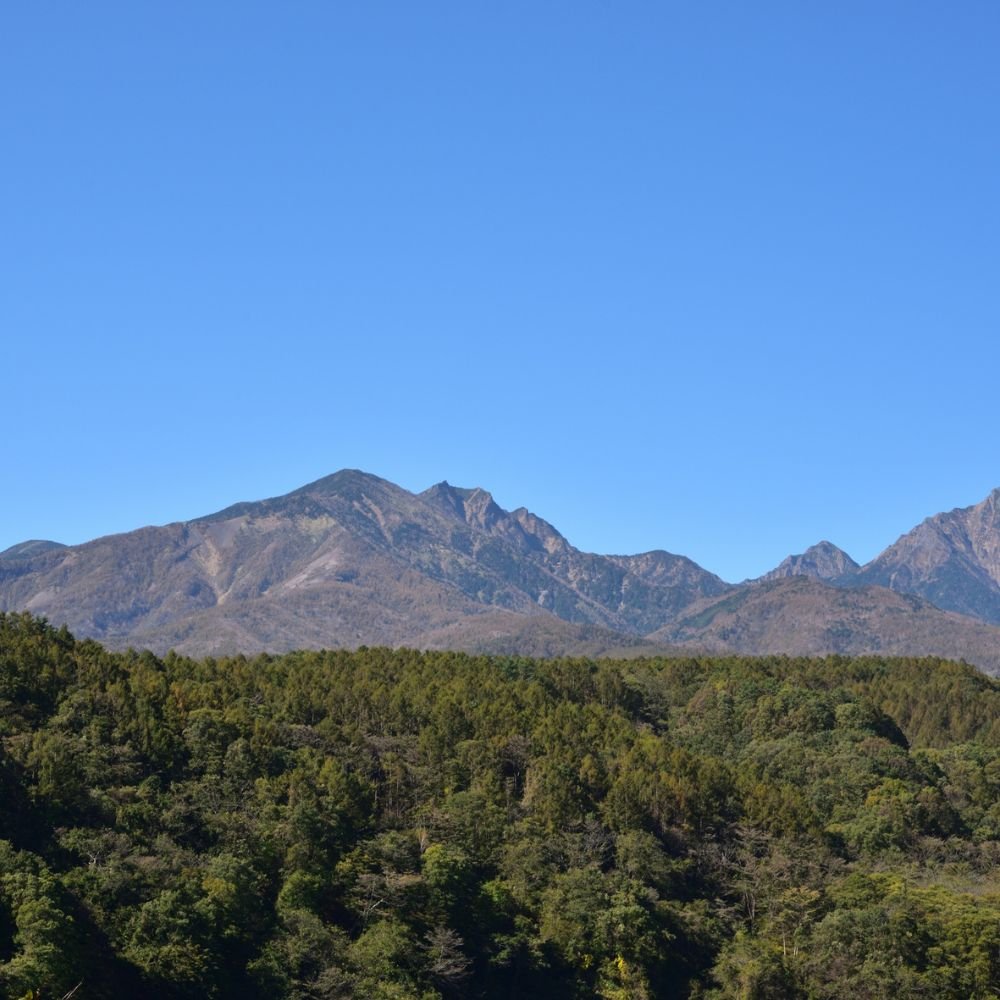
At the foot of Mt. Kaikomagatake, we began on a small private plot in Yamanashi.
Fire, water, earth. What is here, we make by hand.
One day, people will come from across the country, and across the world.
Not loudly — quietly. From here.
The foot of Mt. Kaikoma is Asian black bear country.
No people within five hundred metres — but the mountain is not uninhabited.
So there are rules.
Carry sound when you walk. A bell, or your voice.
Leave no food or scented waste outside. Pack everything out.
Do not enter the forest alone at dawn or dusk — above all in autumn.
If you meet one: do not run, do not turn your back. Keep your eyes on it and step back slowly.
A small bear means a mother nearby. Take distance first. No photographs.
This is not meant to frighten. It only means this is a mountain.
You will not find it in search. It is not on the map.
The only way to visit is to be invited.
To the first few we invite — the Himori (fire-keepers) — we send word.
After you register, there is a review.
Never disclose the place or the price to outsiders. Keep your respect for the fire, the water, and others.
Those who pass the review and become Himori can reserve, by the hour, from the member page.
This is not a reservation. It is only so that the first invitation reaches you first.
or write directly to info@yu-ka.space.
20 minutes by car from Sutama IC on the Chuo Expressway.
2 hours by car from Shinjuku IC on the Metropolitan Expressway.
The nearest station is Hinoharu on the JR Chuo Line.
There are no set times for arrival or departure. There is no key to hand over — you let yourself in.
The exact place and directions are shared with those who are invited.
Another way onto the wild land of YUUKA.
A place to run a Jimny across stream, slope and trees.
Any year. Sierra and Nomad too.
The launch of NOBI — the Jimny-only private off-road experience — was featured by the Japanese automotive media Response (Response.jp).
Read the article ↗Central / Western Yamanashi (Hokuto) · JMA ・ Issued 7/15 17:00